Who Is Sophia?
The Scorpion of the Seas
Sophia is the playable protagonist of Resonance and a returning face from A Plague Tale: Requiem. Who she is, what she can do, and who plays her.
Info checked · September 5, 2026
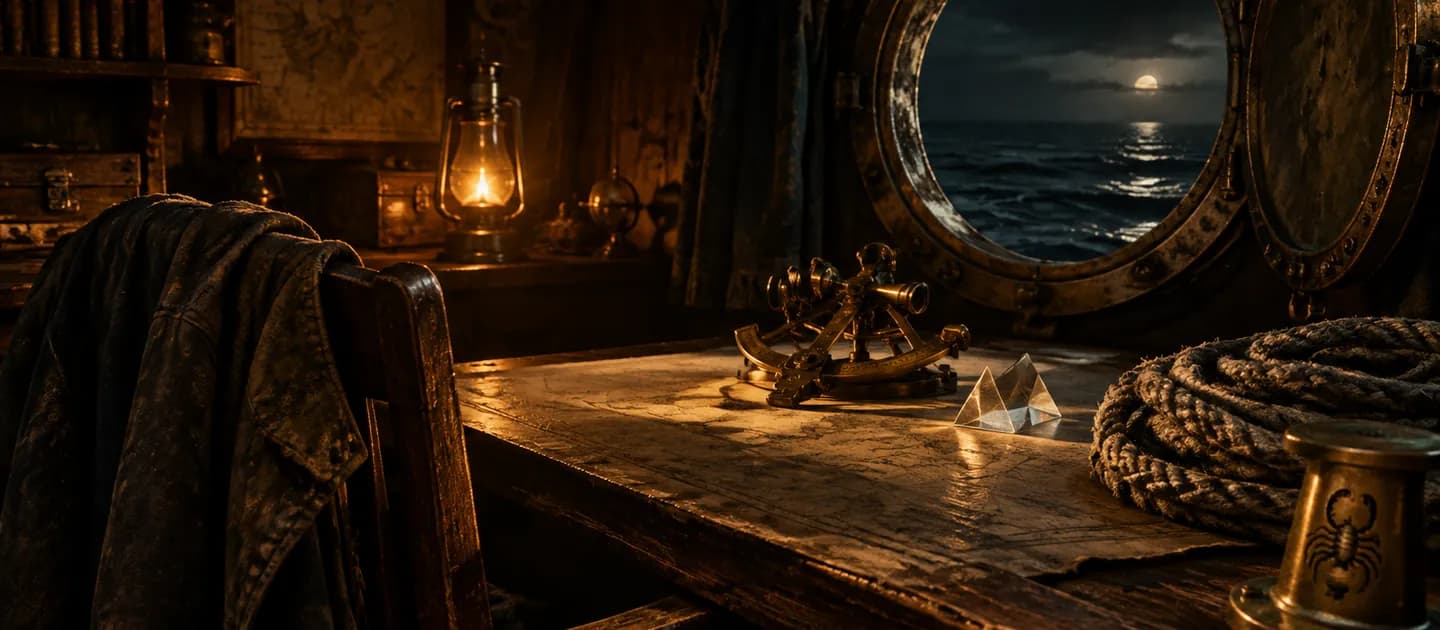
Short answer: Sophia is the playable protagonist of Resonance: A Plague Tale Legacy — a smuggler and ship's captain known as the Scorpion of the Seas, who first appeared as a supporting character in A Plague Tale: Requiem. Resonance takes place roughly fifteen years before Requiem and tells the story of her younger self. She is voiced and motion-captured by Anna Demetriou.
Where Requiem players already know her from
In Requiem, Sophia is the smuggler who helps Amicia and Hugo de Rune leave Provence and reach the island of La Cuna, because she owes a debt to Arnaud Malpart and refuses to stay in anyone's debt. She uses a prism to manipulate light while helping the siblings work through hidden ruins, which is the same tool you carry in Resonance.
That is as far as we take it. Requiem's later story beats belong to Requiem, and we keep them off this page — you can play Resonance without knowing them, and the game is set fifteen years earlier anyway.
Her background before the island
According to the series community wiki, Sophia was born around 1312 to a wealthy mother and a smuggler father named Alec. When her mother learned what Alec did for a living, she sent Sophia to a convent to keep her from following him; Sophia made several escape attempts before her father took her out in a raid.
From there she grew up inside one of Venice's most feared plundering gangs, where she saw her first fights and raids as a child and teenager. That upbringing is the whole explanation for the character you control in Resonance: someone who learned to fight before she learned anything else.
Later, long after the events of this game, she rises to captain her own ship, The Rascasse, and earns the nickname that follows her — the Scorpion of the Seas.
What brings her to Minotaur's Island
The community wiki dates her arrival to the 1330s, drawn by an unresolved pull connected to her own past. On the island — described as an ancient Minoan site — she begins experiencing resonations with the legendary hero Theseus, witnessing his trials and battles as if they were happening to her.
That is the hook the game's dual timeline hangs on: her present and the Minoan past are linked, and what happened then changes what she faces now. The mechanical side of that is covered on our gameplay page.
What she can actually do
- Melee combat. Raised with a sword in her hand, she is described as trained, physical and offensive, using a sword and dagger, parrying attacks and landing heavy strikes on her pursuers. Stealth remains available when she wants to lie low.
- The prism. Her personal treasure. She can burn grass with it to create distracting smoke, and channel light from a nearby fire to create a lit area around her — an ability called refracting.
- The Minoan sphere. Stolen on the island, it manipulates light at a far larger scale and is the key to the island's ancient machinery.
- Navigation and observation. As a captain she works with tools, maps and a crew notebook, and her habit is to wake early, observe and listen.
- Temporal echoes. Her connection to ancient Minoa is not only narrative: actions taken by Theseus in the past shape the paths she meets in the 14th century, linked through the Macula.
Who she is
Sophia is wise-cracking and flippant on the surface and calculating underneath. She holds herself to a personal code built around returning favours and hating to owe them, which is exactly how she ends up entangled in other people's problems in Requiem.
She is loyal once you have earned it, has a strong sense of who does and does not deserve harm, and is drawn to treasure and to trouble. She is also afraid of heights, which is a small, human detail in a character otherwise built to look unshakeable.
In Resonance specifically, her demeanour is described as extremely independent, self-sufficient and aggressive — a warrior by nature who avoids pointless conflict but does not hesitate when cornered. The island pushes her somewhere more introspective, into reckoning with her upbringing and with the father figures in her life.
How Asobo rebuilt her for this game
Sophia's expanded role began with Asobo wanting to revisit the world of A Plague Tale from a new angle, and the team felt she deserved the spotlight after Requiem only hinted at her past. The writing team describes building her around abandonment, grief and collapsing pillars, and around how a fighter's mentality forms — with her movement toward vulnerability treated as a strength rather than a softening.
Her look was reworked to match a younger, harsher, more resource-scarce life: dingy leather and dull fabrics instead of the baggier, more colourful clothes of Requiem, and deliberately untamed hair in the childhood depictions. Her tattoos, including the floral patterns on her neck, were treated as fixed assets so she still reads as the same person you meet fifteen years later, while her accessories were allowed to change because she is a collector by temperament. The team also added cloth simulation and redesigned her coat with split, gladiator-style strips so that crouching, climbing and fighting look expressive.
Who plays her
Anna Demetriou voices Sophia and performs her motion capture in Resonance, having previously voiced her in Requiem, where the motion capture was performed by Giorgia Sinicorni. A younger Sophia is credited to Fabiola Zannini. The role was cast specifically from Mediterranean actors, and Demetriou is half Greek.
The full credited cast, including Leni, Faro, Alec, Daedalus and Minos, is listed on our cast page.
Do you need to play Requiem first?
No. Resonance is set roughly fifteen years before Requiem, so it runs ahead of the events Requiem players know, and it is built around a character whose past that game only gestured at. Coming in cold means meeting Sophia the way the writers designed her: as a young plunderer, not as someone's rescuer.
What Requiem gives you is recognition rather than comprehension. You will notice the prism, the code about debts and favours, and the gap between who she is here and who she becomes. None of that is required to follow the story in front of you.
The reverse order has a cost worth naming: this page and the wiki generally avoid Requiem's later plot, but a character page about a prequel protagonist inevitably tells you she survives to appear in a later game. If that bothers you, play in release order.
Two small details
Her name is Greek and means wisdom, which is a deliberate fit for a story that sends her into a Minoan temple. And according to composer Olivier Derivière, Sophia has no musical theme of her own in Requiem — she is almost always at the de Runes' side, so a separate theme would have been too much.
What we could not verify
Most of this page rests on a community-edited wiki rather than an official character bio. Her exact age in Resonance, her birth year, the precise in-game dates and the details of her family history are to be confirmed against an official source. Nothing about her arc inside Resonance — what she learns, who she meets, how it ends — appears here at all.