Resonance: A Plague Tale Legacy Gameplay
How It Plays
How Resonance actually plays: aggressive melee instead of pure stealth, light as a puzzle tool, and a story that jumps between two timelines.
Info checked · September 5, 2026
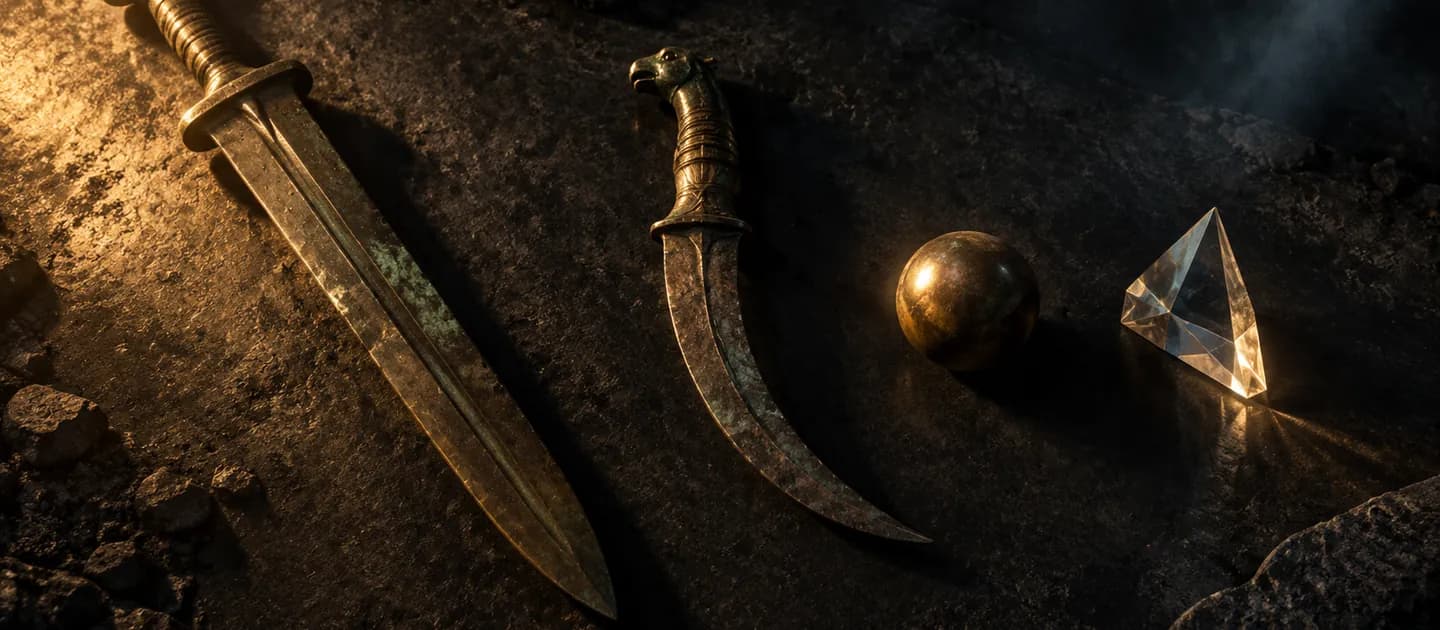
Short answer: Resonance: A Plague Tale Legacy gameplay is single-player action-adventure built on three pillars — close melee combat with parries and heavy strikes, light puzzles solved with a stolen Minoan sphere, and exploration of a maze-like island while something hunts you. It is a clear move away from the pure survival-stealth of the earlier A Plague Tale games, because Sophia can fight back.
What kind of game this is
You play one character, Sophia, through a story campaign that press and community listings break into 14 chapters. There is no multiplayer mode: Steam lists the game as 1 Player. The moment-to-moment loop alternates between combat encounters, environmental puzzles built around light, and traversal through an island that is designed to disorient you.
If you have played A Plague Tale: Innocence or Requiem, the shape is familiar — a narrative-driven adventure with set-piece problems between story beats — but the verbs have changed. Where Amicia's games were about avoiding a fight you could not win, this one hands you a sword and expects you to use it.
Combat: read the attack, answer it
Sophia is a seasoned plunderer who was raised with a blade in her hand, and she plays as a faster, more aggressive protagonist than the series has had before. She parries incoming attacks, dodges what cannot be parried, and lands heavy strikes into the opening that follows. Stealth is still available when you want to lie low, but it is one option among several rather than the only survivable approach.
Community accessibility mods separate ordinary and yellow-marked melee swings, which they auto-parry, from red-marked attacks, which they auto-dodge instead. That points at a colour-coded telegraph system, but no official source in our material confirms the colour language, so we mark it community-reported, to be confirmed.
The same mod scene tells us something else: at least one mod reduces the cost of every skill and specialization to a single point, so the game has a progression system with unlockable skills. The shape of that tree, and what is worth buying first, is to be confirmed — we will not sketch a build order we have not seen.
The prism, and what light does in a fight
Sophia carries a handheld prism she calls her greatest treasure, and it is a tool rather than a keepsake. She can channel light from a nearby fire to create a lit area around herself — the ability is described as refracting — and she can set grass alight to produce smoke that breaks line of sight.
That gives light a double role in this game. It is the medium of the puzzles, and it is also a tactical resource in an encounter, which is why leaving a fight and re-entering it on your own terms is a legitimate tactic rather than a failure state.
The Minoan sphere and the island's machinery
On the Minotaur's Island, Sophia steals a Minoan sphere that manipulates light at a much larger scale than her prism. It is the central tool for solving the island's ancient mysteries and waking its machinery, and it is what most environmental puzzles come back to: not "what key am I missing" but "where does the light need to go".
The island itself is described as a giant, treacherous maze full of puzzles designed by the architect Daedalus. Individual puzzle solutions live on our light puzzle page, and every one of them is verified before it goes up.
Navigation and the crew notebook
Sophia is a ship's captain by trade, and she works the way a navigator does — with tools, maps and a crew notebook. The notebook is the game's built-in hint system: when the route stops being obvious, it holds the clues she has gathered so far.
Pair it with observation. The island rewards noticing what is lit, what is broken and what has been moved, which fits a character whose own description of her life is to wake early, observe, listen and make the best of it.
Something is hunting you
A restless presence stalks the island's depths. It tracks Sophia's movement and acts as a persistent hunter, which forces you to keep a steady pace instead of standing still to plan your route. That single design decision changes how the puzzles feel: you are solving them under pressure, not at leisure.
How the hunter escalates, whether it can be permanently escaped, and what happens if it catches you are all to be confirmed.
The dual timeline
The story runs on a dual-timeline system, jumping between Sophia's journey and ancient Minoan times. It follows two protagonists whose fates are linked by the Macula, and actions taken in the ancient past ripple forward to change the paths and battles Sophia faces in the present.
That is a mechanic, not just a framing device — the past is described as directly reshaping the present-day route. How often the game switches, and how much control you have over when it happens, is to be confirmed.
What a chapter actually looks like
The published chapter list is a useful preview of the loop, because the subchapter names describe the beats. Chapter 1, Blood Ties, runs through a home, a cabin, a search for a key and a fighting pit — domestic setup, an objective hunt, then a combat set piece.
Later chapters keep that rhythm and add the island's machinery to it: Chapter 6 moves through being lost, a creature, Minoan machinery and the architect. You can see the three pillars taking turns, and because each chapter is split into subchapters, you can replay a single beat instead of a whole chapter. The full breakdown is on our chapters page.
Is it open world?
No source we have checked calls it open world, and the structure argues against it: a chapter-and-subchapter list that can be replayed piece by piece is how level-based, story-ordered games are built, not how open worlds are described.
What the material does say is that the island is a large maze with puzzle architecture and a hunter moving through it, which suggests explorable spaces inside a directed route. Until we can confirm it from an official source or from play, the exact degree of openness is to be confirmed — we are not going to answer a yes/no question with an assumption.
How it differs from the earlier games
- Protagonist capability: Sophia is trained, physical and offensive; Amicia was improvising with a sling.
- Combat posture: parrying and striking replace hiding as the default answer.
- Signature tool: a light-bending sphere and prism instead of alchemical ammunition.
- Story structure: two linked timelines rather than one continuous journey.
Still to be confirmed
Difficulty settings and what they change, the enemy roster, the full skill tree, the number of endings, average completion time, and whether a New Game Plus mode exists. None of those are answered by the sources we have checked, so none of them are answered here.
Keep reading
What is Resonance: A Plague Tale Legacy?
Game Overview
Developer, platforms, release date and the premise, with every figure traced to an official source.
Read guide
Resonance Beginner Guide
Your First Hours
Controls, exploration and the habits that matter before you reach the island's first real trial.
Read guide